
If you have visited multiple dental practices and been told the same thing: "You do not have enough bone for dental implants," you have likely felt the same crushing disappointment thousands of our patients have felt before walking into Arvada Dental Center & Implants.
Here is the truth most general dentists will not tell you: even patients with severe upper-jaw bone loss can almost always receive permanent fixed teeth. The solution is called zygomatic implants, and it is one of the most life-changing procedures in modern implant dentistry. This guide explains what zygomatic implants are, who they are for, how the procedure works, and why so few dentists in Colorado are trained to perform them.
Why Most Dentists Say "No Bone, No Implants"
Traditional dental implants are placed into the jawbone. The implant fuses with the bone over 3 to 5 months in a process called osseointegration, then a crown or bridge is attached on top.
For this to work, you need enough healthy bone in the right places. Years of missing teeth, denture wear, gum disease, or trauma can cause the jawbone to resorb until there is not enough bone for an implant to anchor into. In the upper jaw, the bone often resorbs upward into the sinus cavity, leaving a thin shell of bone with the sinus floor sitting directly above where implants would need to go.
When a general dentist tells you "you have no bone," they usually mean "I cannot place traditional implants because there is not enough bone in your jaw, and I am not trained in the advanced alternatives." This is technically correct from their training perspective, but it leaves patients believing they are out of options when they are not.[INSERT IMAGE: Diagram showing severe upper-jaw bone loss with sinus cavity expansion]
What Are Zygomatic Implants?
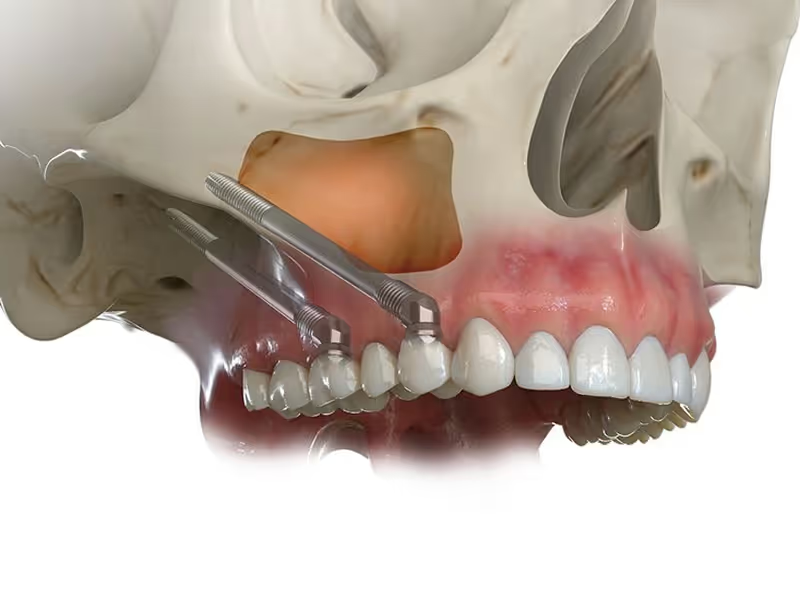
Zygomatic implants are longer titanium implants (typically 30 to 55 mm long, compared to 8 to 13 mm for traditional implants) that anchor into the cheekbone (zygoma) rather than the jaw. The cheekbone is dense, structurally robust, and almost never affected by the bone loss that destroys the upper jaw.
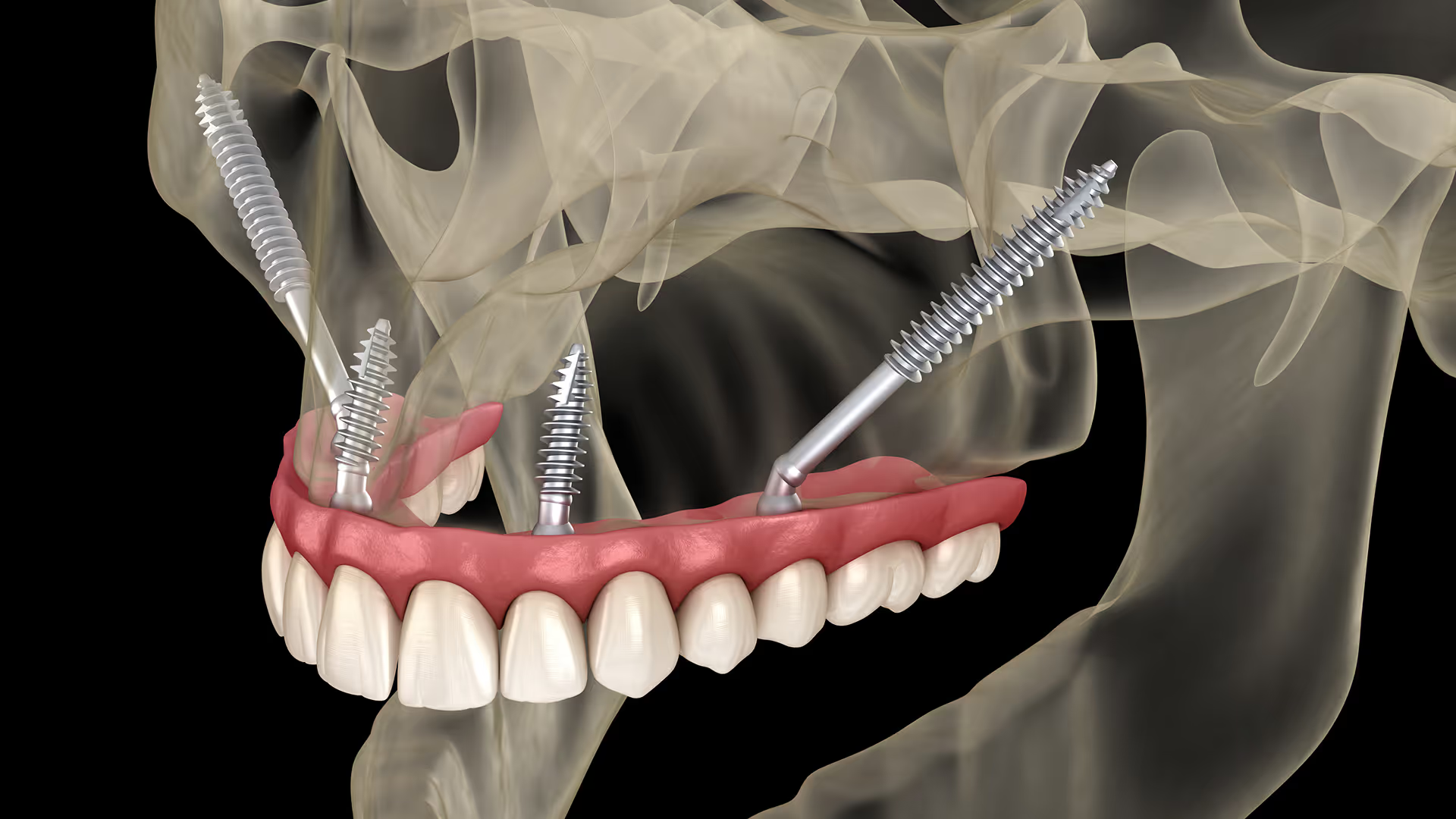
By bypassing the jaw entirely and anchoring into the cheekbone, zygomatic implants create a stable foundation for a fixed full-arch bridge even when the upper jaw is severely atrophied. Most zygomatic cases use 2 zygomatic implants combined with 2 to 4 traditional implants in the remaining front jawbone to support an All-On-X-style full-arch restoration.
The result: a permanent, non-removable set of teeth for patients who have been told for years that implants were not possible for them.
Who Is a Candidate for Zygomatic Implants?
Zygomatic implants are designed specifically for patients with severe upper-jaw bone loss. You may be a candidate if:
- You have been told you have "no bone" for traditional implants
- You have worn upper dentures for many years
- You have had failed previous bone grafts
- You have had failed sinus lifts
- You have severe periodontal disease that has destroyed upper bone
- You want to avoid 6 to 12 months of bone grafting and waiting
- You have been told you need a "sinus lift" but want to skip it
Zygomatic implants are typically used only in the upper jaw because the lower jaw rarely experiences the same severe bone loss. Patients with adequate jawbone are better served by traditional All-On-X implants, which are less complex and less expensive.

What Is the Zygomatic Implant Procedure Like?
The full zygomatic procedure at Arvada Dental Center & Implants takes 2 to 4 hours and is performed under IV sedation, so you sleep through the entire surgery. Here is what to expect.
Step 1: 3D CBCT Scan and Surgical Planning
We start with a detailed 3D Cone Beam CT scan that maps your cheekbones, sinus cavities, and remaining jawbone in precise detail. Dr. Bennett uses fully-guided surgical planning software to design the exact placement, angle, and depth of every implant before you arrive on surgery day.
Step 2: IV Sedation and Surgery
On surgery day, Dr. Bennett administers IV sedation under continuous vital sign monitoring. While you sleep, he extracts any remaining failing teeth, places 2 zygomatic implants into the cheekbones, and places 2 to 4 traditional implants in the remaining front jawbone. The entire procedure typically takes 2 to 4 hours.
Step 3: Same-Day Healing Teeth
Before you leave the office, Dr. Bennett attaches a temporary fixed bridge to your new implants. You walk out the same day with a complete set of teeth, never going without a smile. The temporary is worn for 3 to 5 months while the implants integrate with your bone.
Step 4: Final Zirconia Bridge
Once integration is complete, your final permanent zirconia bridge is fabricated in our in-house dental lab and placed. The final bridge is custom-shaped, custom-shaded, and designed to last 15 to 20 years or more with proper care.
Why Are Zygomatic Implants Available at So Few Practices?
Zygomatic implant surgery is one of the most technically demanding procedures in implant dentistry. It requires advanced training, extensive experience, and the right equipment. Most general dentists never learn the technique, and even many oral surgeons do not perform it routinely.
Dr. Gregory Bennett has placed over 5,000 dental implants in 24+ years of practice and has dedicated advanced training in zygomatic, pterygoid, and trans-sinus techniques. He is recognized as a Top Dentist by 5280 Magazine and is Moderate IV Sedation Certified with annual ACLS renewal, which means we can perform this complex surgery safely under our own roof without sending you to a separate surgical center or hospital.
For patients across Colorado who have been told implants are not possible, Arvada Dental Center & Implants is one of the very few practices offering zygomatic implants as a routine procedure.
How Much Do Zygomatic Implants Cost?
Zygomatic implant treatment is highly individualized and pricing depends on how many zygomatic implants are needed, whether standard implants are placed alongside them, and the type of final restoration. We walk you through a fully itemized quote at consultation.
IV sedation is always included. Most patients are surprised to find that when compared against the cost of multiple bone grafts, sinus lifts, and years of staged treatment, zygomatic implants are often more affordable than the conventional path. Financing starts as low as $348 per month through our 12+ partners including CareCredit, Cherry, Sunbit, PatientFi, Proceed Finance, and LendingClub. Visit our Insurance & Financing page for full details.
In Conclusion
If you have been told you have no bone for dental implants, you almost certainly have not been told the full truth. Zygomatic implants offer permanent fixed teeth to patients who have been turned away from traditional implant treatment, by bypassing the jawbone entirely and anchoring in the cheekbone. The procedure is complex, but in the hands of an experienced specialist like Dr. Bennett, it is a routine path back to eating, speaking, and smiling without restriction. A free consultation and 3D CBCT scan will tell you definitively whether zygomatic implants are right for your case.