
Congratulations on taking the step to restore your smile with a dental implant. Whether you have just had your procedure or are preparing for one, knowing exactly what to expect during recovery will help you heal faster, avoid complications, and feel confident every step of the way.
This guide walks you through dental implant recovery week by week, from the first 24 hours after surgery through full osseointegration over the next 3 to 6 months. Every patient heals slightly differently, but the timeline below reflects what most of our single tooth dental implant patients at Arvada Dental Center & Implants experience.
The First 24 Hours After Surgery
The first day after your implant surgery is the most important for setting up successful healing. Your job is simple: rest, control the bleeding, manage swelling, and avoid disturbing the surgical site.
What To Expect
- Mild bleeding at the surgical site for the first 2 to 4 hours. Bite gently on the gauze we provide.
- Swelling that peaks at 48 to 72 hours after surgery. Apply ice packs to the cheek (20 minutes on, 20 minutes off) for the first 24 hours.
- Mild to moderate discomfort as the local anesthesia wears off. Take prescribed pain medication or ibuprofen as directed before the numbness fully wears off.
- Mild grogginess if you had IV sedation. You will need a driver and should not work, drive, or sign legal documents for the rest of the day.
What To Do
- Rest with your head elevated on pillows to reduce swelling
- Keep gauze in place with gentle pressure for 30 to 45 minutes at a time
- Take pain medication as prescribed, before pain becomes severe
- Apply ice packs to the outside of your cheek (20 min on, 20 min off)
- Drink plenty of cool water and clear fluids, but avoid using a straw
What To Avoid
- No smoking, vaping, or alcohol for at least 72 hours
- No spitting forcefully, as this can dislodge the blood clot
- No drinking through a straw for the first 5 days
- No rinsing or spitting for the first 24 hours
- No driving or operating machinery if you had IV sedation

Days 2 to 7: The First Week
By day 2, the worst of the swelling and discomfort begins to subside. Most patients return to work in a desk job by day 3 to 5 if they feel up to it.
What To Expect
Swelling reaches its peak at 48 to 72 hours, then begins to subside. Bruising may appear on the cheek or jaw on day 2 or 3 and usually resolves within a week. Discomfort decreases steadily and is typically manageable with over-the-counter ibuprofen by day 4 or 5.
Salt Water Rinses Start on Day 2
Beginning 24 hours after surgery, gently rinse with warm salt water (1/2 teaspoon salt in 8 oz warm water) 3 to 4 times per day, especially after meals. Do not swish forcefully. Let the water flow gently over the surgical area, then let it drip out of your mouth instead of spitting.
Soft Food Diet
For the first 7 days, stick to a soft food diet that does not require chewing near the implant site. Good options include:
- Smoothies, yogurt, and protein shakes
- Mashed potatoes, cottage cheese, and applesauce
- Soft scrambled eggs, oatmeal, and well-cooked pasta
- Soft fish, ground meat, and tofu
- Avocado, hummus, and refried beans
Avoid hard, crunchy, chewy, or spicy foods. Avoid hot temperatures for the first 24 to 48 hours. Avoid seeds, nuts, popcorn, and anything that could lodge in the surgical site.
Weeks 2 to 4: The Soft Tissue Heals
By week 2, the gum tissue around your implant is well on its way to healing. Most patients have returned to normal daily activities. Your follow-up appointment with Dr. Bennett at the 1 to 2 week mark confirms that healing is progressing well.
What To Expect
Swelling should be completely gone by week 2. Mild tenderness when chewing on the implant side is normal. Stitches (if non-dissolving) are removed at your follow-up visit. You can begin gentle chewing on the opposite side of the implant.
Oral Hygiene Resumes
Begin brushing the implant site gently with a soft toothbrush starting at week 2. Continue salt water rinses after meals. Do not floss directly around the implant abutment until cleared by Dr. Bennett, typically at the 4 week visit.
Months 2 to 6: Osseointegration
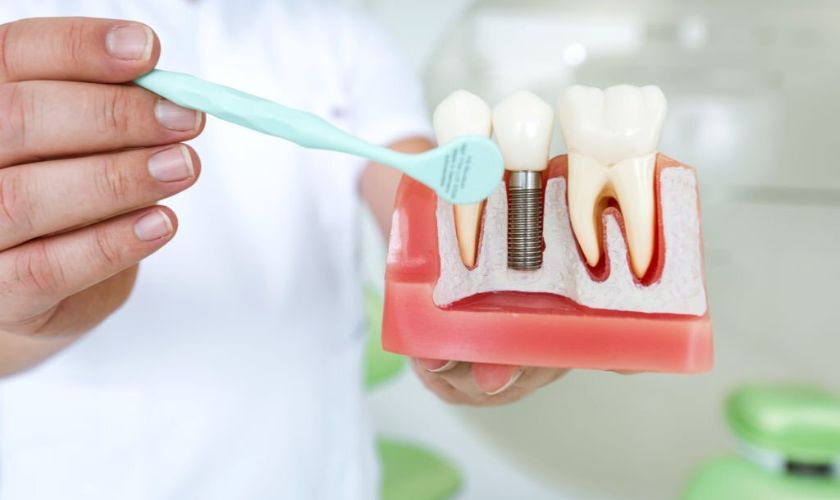
This is the longest phase of recovery and the most important biologically. During months 2 through 6, your implant is fusing with your jawbone in a process called osseointegration. The titanium surface of the implant bonds with the surrounding bone at a molecular level, creating a permanent anchor stronger than a natural tooth root.
You will not feel osseointegration happening. From a daily-life perspective, this phase is uneventful. You eat normally, brush and floss normally, and go about your routine. The implant is healing quietly underneath the gum line.
The Final Crown
Once Dr. Bennett confirms full osseointegration (typically at 3 to 6 months depending on bone quality), you return for your final crown placement. This visit takes about an hour and involves taking a final impression, then placing the custom-made permanent crown on the implant abutment. From this moment forward, your implant looks, feels, and functions exactly like a natural tooth.
What Could Go Wrong (And How To Prevent It)
Dental implants have a success rate of 95% to 98% in healthy patients with proper aftercare. The small risk of failure is almost always preventable. The most common causes of implant failure are:
- Smoking: Smokers have 2 to 3 times the implant failure rate. Quit at least 2 weeks before surgery and avoid smoking for at least 4 weeks after.
- Poor oral hygiene: Plaque buildup around the implant can cause peri-implantitis, an infection that mimics gum disease.
- Skipping follow-ups: Regular check-ups catch small issues before they become big problems.
- Chewing too hard too soon: Putting heavy pressure on the implant during osseointegration can disrupt bone fusion.
For more information on what makes a successful long-term implant case, visit our What To Expect page.
When To Call Us
Call Arvada Dental Center & Implants at (720) 719-9579 immediately if you experience:
- Bleeding that does not stop after 4 hours of pressure
- Severe pain not controlled by prescribed medication
- Swelling that worsens after day 3 instead of improving
- Fever above 101 degrees Fahrenheit
- Pus or foul taste from the surgical site
- Numbness in the lip, tongue, or chin that does not resolve within 24 hours
In Conclusion
Dental implant recovery is a marathon, not a sprint. The first week requires the most attention and care, but with proper rest, soft foods, and gentle oral hygiene, you will be back to normal activities quickly. The 3 to 6 month osseointegration period is uneventful from your perspective, but it is when the real long-term success of your implant is built underneath the gum. Follow this guide carefully, attend all your follow-up visits, and you will join the 95% to 98% of patients who enjoy their implants for a lifetime.